

PERSONAL STORY OF MUSCLE GSD
GETTING STRONGER AND FITTER
Diagnosed in 2007, Erin did not get much guidance on managing McArdle’s. Then Facebook group posts encouraged her to try the ketogenic diet. Feeling better, she followed the advice for strength training. In her 40s she is much better than in her 20s. She hopes her experience will inspire others to avoid deterioration as they get older.
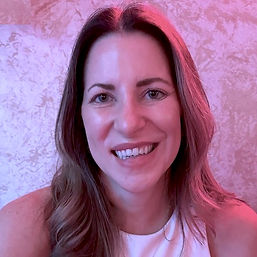
Name
Erin
Country
Texas, USA
GSD
McArdle’s (GSD5)
Diagnosed
23
Written
42
Date
04/2026
Concern about the impact of age
I know many McArdle’s people have concern about how McArdle’s impacts us as we age, so I wanted to offer a positive datapoint of both muscle growth and improvements in exercise and activities of daily living. This is my own experience, I hope it is helpful.
Physical improvements with McArdle’s can feel like a long, uphill slog. For me, consistent and careful efforts, aligned with clinical practice recommendations, have resulted in muscle growth, improvements in aerobic capacity and fewer daily symptoms/injuries. I am c.9 years into my experimentation with lifestyle interventions and have more muscle mass and exercise capacity now in my 40s than I did in my 20s.
One personal goal
One of my personal goals with McArdle’s is to continue being able to travel internationally – it is a big part of my joy and my family’s time together. For me, that translates into VERY practical life goals like:
• Being able to walk c.10,000 steps a day during a trip.
• Handling my own luggage (like lifting a carry-on bag into the overhead bin safely).
• Keeping up with a full day of activity, with the right pacing.
That goal has shaped my desire to stay active for as long as safely possible.
Shifting to low-carb/ketogenic diet
The first meaningful change I made was shifting to a low-carb/ketogenic approach back in 2017 after others in the McArdle’s Facebook group shared their success with it. I was a sugarholic prior and I vividly remember visiting Dr. Haller for a McArdle’s study in Dallas – staying at the hotel next to his office which offered “free unlimited fresh-baked cookies” every evening at 7pm. I had a handful of them two nights in a row for “dinner”. But I was so tired of feeling crampy, tired and irritable that I swore to Dr. Haller the next day that I was going to “try” keto.
Dr Haller told me that if I was going to try it, commit for at least 90 days because there is an adjustment period where the body is shifting how efficiently it uses fuel (from glucose to fat oxidation), and that can take time. After 90 days, I recognized how much easier it had become for me to get into second wind, and not have to stop mid-task all the time.
I have been on some version of low carb or keto ever since (except for breaks for special occasions/holidays, because I am not a robot). It also helped me with early signs of insulin resistance, and (for me personally) made it easier to start exercising following a very cautious, evidence-informed approach, including warming up carefully to reach second wind before aerobic activities.
Learning about strength training
A few years later, after the McArdle’s presentations at the AGSD conference in Houston in 2019, I started carefully strength training using protocols designed specifically for people with McArdle’s (based on work by researchers like Alfredo Santalla and others). Their work is in the Training Support guidelines on the IamGSD website, it includes:
• Using the six-second rule for anaerobic movements (i.e. doing short sets with low reps under 6 seconds per muscle – for example, 4 bench press reps under 6 seconds).
• Taking long rest periods between sets (resting a muscle/muscle group for 2.5 to 3 minutes between sets).
• Focusing on consistency rather than intensity.
• Increasing weight slowly over time – for example, I went from having to use an adapted 15 lb/6.8 kg barbell for bench press, to now using the standard 45 lb/20 kg barbell, and adding weight to it.
Progress is good - with the weights I am almost up to a 1 repetition maximum bench press for an average woman of my age/size WITHOUT McArdle’s.)

The Greek Aegean island of Santorini, with classic white architecture.

Amazing sights in Thailand.

Keeping braced on a wobbly suspension bridge.
The Greek Aegean island of Santorini, with classic white architecture.
Erin loves traveling with family and friends.
Benefits from low-carb/keto and exercise
I continue to eat low carb, but am focusing mostly on eating enough protein to support muscle growth (especially because I “assume” on some level, we are always experiencing more muscle damage/turnover than the average human). I have been able to increase my strength significantly, like:
• Doubled my squat/bench press/deadlift.
• Significant improvement in my tolerance for both aerobic activity and activities of daily living.
• Decreased my risk of muscle damage – which aligns with what some of the research suggests.
It “appears” to take a much higher threshold of activity to cause me to cramp or cause damage. I have not experienced an episode of hospitalization with rhabdomyolysis in over 5 years. Most importantly, I started getting DEXA scans to make sure I was building more muscle (and not inadvertently destroying it by lifting). My DEXA scans have shown increases in total muscle mass between the ages of 40 and almost 43, including more muscle mass in my arms and legs corresponding to my exercise increase.
My original diagnostic biopsy showed zero myophosphorylase, so I am not one of the lucky few to have some enzyme activity on my side.
It may not be for everyone
I am sharing this not to say it is a perfect solution for everyone – we all have different starting points, histories, and other health factors. But I did want to share that, at least in my experience (and supported by the research), it is possible to build strength and improve function with McArdle’s when things are approached carefully and consistently.
Is it frustratingly slow? Yes. Do I lift weights in the privacy of my own garage so I do not feel embarrassed and pressured to keep up with the gym rats? Um, Yes. Do I miss occasionally eating handfuls of cookies for dinner?! Also, Yes. But I FEEL so much better in my body.
If you’re struggling, I completely understand.
McArdle’s can be incredibly limiting, especially depending on history and other factors (like comorbid diagnoses). I am just sharing this in the hope that it gives someone the determination to keep slowly chipping away at their goals to be safely active.